

Renovating your home is an opportunity to do more than improve its appearance. With the right choices, a renovation can make your home more comfortable, reduce energy and water consumption, and create a healthier living environment.
For homeowners in the Western Cape, eco-friendly home renovations are particularly relevant. The region experiences hot, dry summers, seasonal rainfall and ongoing pressure on water and energy resources. Designing around these local conditions can make your home more efficient and resilient while still delivering the style and functionality you want.
At Living Design, we believe sustainable renovations should combine thoughtful design, practical performance and timeless aesthetics. Here are some eco-friendly renovation ideas to consider for your Western Cape home.
1. Improve Your Home’s Insulation
Good insulation is one of the simplest ways to improve a home’s energy efficiency.
A well-insulated roof, ceiling and walls can help keep indoor temperatures more stable throughout the year. This means your home can stay cooler during hot summer days and retain warmth more effectively during colder winter nights.
When renovating, consider:
- Upgrading roof or ceiling insulation.
- Insulating walls where practical.
- Sealing gaps around windows and doors.
- Using appropriate glazing to improve thermal performance.
- Combining insulation with good natural ventilation.
A better-performing building envelope can also reduce the amount of energy required for heating and cooling.
2. Make the Most of Natural Light
Thoughtful use of natural light can transform a home while reducing reliance on artificial lighting during the day.
Consider enlarging or repositioning windows where appropriate, adding skylights, or using internal glass doors to allow daylight to travel deeper into the home.
However, more glass is not automatically more sustainable. Window placement, glazing and shading should be considered together to prevent excessive solar heat gain.
The City of Cape Town’s guidance on SANS 10400-XA highlights the importance of orientation, shading, glazing and the building envelope when improving energy performance.
3. Install Energy-Efficient Windows and Doors
Older single-glazed windows can contribute to heat gain, heat loss and unwanted draughts.
When renovating, replacing inefficient windows with better-performing glazing can improve comfort and energy efficiency. Consider the orientation of each window rather than specifying exactly the same solution throughout the house.
External shading can also be valuable. Depending on the design, options can include:
- Deep roof overhangs.
- Adjustable shutters.
- Exterior blinds.
- Pergolas.
- Screens.
- Strategically planted trees.
These features can reduce direct summer sun while still allowing desirable daylight into the home.
4. Consider Solar Power
Solar energy is an increasingly practical option for Western Cape homeowners.
A solar PV system can generate electricity on-site, potentially reducing your reliance on grid electricity. Battery storage can also help homeowners use more of their generated electricity when solar production is low.
If you are renovating, it is worth considering your energy strategy early rather than trying to add solar equipment as an afterthought.
In Cape Town, new solar PV and battery installations connected to the municipal grid require authorisation, approved equipment and professional sign-off.
A renovation is also a good opportunity to reduce your home’s electricity demand first. More efficient lighting, appliances, insulation and hot-water systems can reduce the size of a future solar installation.
5. Upgrade Your Hot-Water System
Hot water can account for a significant portion of household energy use, making it an important area to address during an eco-friendly renovation.
Depending on your home and budget, options may include:
- Solar water heating.
- Heat-pump water heaters.
- Better insulation around hot-water pipes.
- Efficient showerheads and taps.
- Well-insulated hot-water storage.
South African building regulations include requirements relating to energy-efficient domestic hot-water provision, with solar heating and heat pumps among the recognised alternatives to conventional electrical resistance heating.
A qualified professional can advise on the most appropriate system for your household.
6. Make Water Efficiency a Renovation Priority
Water-wise design is particularly important in the Western Cape.
Rather than treating water efficiency as an optional extra, consider it part of the overall renovation strategy. The City of Cape Town continues to focus on long-term water conservation and demand management, while current conditions reinforce the importance of household water efficiency.
Inside the home, consider:
- Low-flow showerheads.
- Water-efficient taps.
- Dual-flush toilets.
- Leak-resistant plumbing.
- Efficient dishwashers and washing machines.
- Separate hot and cold water controls where appropriate.
Small improvements throughout a home can add up to meaningful reductions in water consumption.
7. Create a Water-Wise Garden
Your outdoor spaces are another opportunity to make your home more sustainable.
Indigenous and water-wise plants can be better suited to local conditions and generally require less irrigation once established. Grouping plants according to their water requirements can make garden maintenance more efficient.
Mulching is another simple strategy. It can help retain moisture in the soil and reduce evaporation.
The City of Cape Town has specifically promoted indigenous planting, composting and mulching as part of water-wise gardening practices.
For a Western Cape renovation, consider combining planting with attractive hard landscaping, shaded outdoor areas and efficient irrigation rather than relying on a large water-intensive lawn.
8. Harvest Rainwater Where Appropriate
Rainwater harvesting can provide an alternative water source for suitable non-potable applications.
A rainwater tank can collect water from roof areas for uses such as garden irrigation, subject to appropriate system design and local requirements.
Even if you do not install a large tank immediately, designing the roof drainage and service areas with future rainwater harvesting in mind can make a later upgrade easier.
The City of Cape Town notes that even relatively small rainfall events can provide substantial volumes of water when collected from a roof.
9. Choose Sustainable Building Materials
The materials you choose can have a significant effect on the environmental footprint of a renovation.
Rather than replacing everything, consider whether existing materials can be repaired, restored or repurposed. Retaining sound elements of an existing home can reduce construction waste and the need for new materials.
When new materials are required, consider:
- Locally sourced products where practical.
- Durable materials with long lifespans.
- Recycled or reclaimed materials.
- Low-VOC paints and finishes.
- Responsibly sourced timber.
- Materials that can eventually be repaired or recycled.
Sustainability is not simply about choosing a product labelled “green”. Durability, maintenance requirements, transportation, installation and end-of-life considerations all matter.
10. Reuse Before You Replace
One of the most sustainable renovation decisions can be keeping what already works.
Before demolishing a kitchen, bathroom or living area, identify which elements can be retained or upgraded.
For example, you might be able to:
- Refinish existing timber flooring.
- Restore original doors.
- Reuse stone or timber.
- Repaint existing cabinetry.
- Upgrade cabinet hardware.
- Repair rather than replace sound fixtures.
- Incorporate existing architectural features into the new design.
This approach can reduce waste while also giving your renovation more character.
11. Improve Natural Ventilation
Western Cape homes can benefit from carefully designed natural ventilation.
Where the layout allows, windows positioned on different sides of a room or building can encourage cross-ventilation. Opening high-level windows can also help warm air escape.
During a renovation, look at how air moves through the entire home rather than considering each room in isolation.
Good ventilation can improve indoor comfort while reducing reliance on mechanical cooling.
12. Use Energy-Efficient Lighting
Replacing older light fittings with LED technology is a relatively straightforward renovation upgrade.
LED lighting generally uses less electricity than traditional incandescent lighting and can provide a wide range of colour temperatures and styles.
You can also reduce energy consumption through good design. Layered lighting, task lighting and daylight can mean you don’t need every light switched on at full brightness throughout the home.
13. Design Outdoor Living Spaces for the Climate
Outdoor living is an important part of Western Cape residential design.
Instead of simply adding more enclosed floor area, consider creating comfortable transitional spaces between indoors and outdoors.
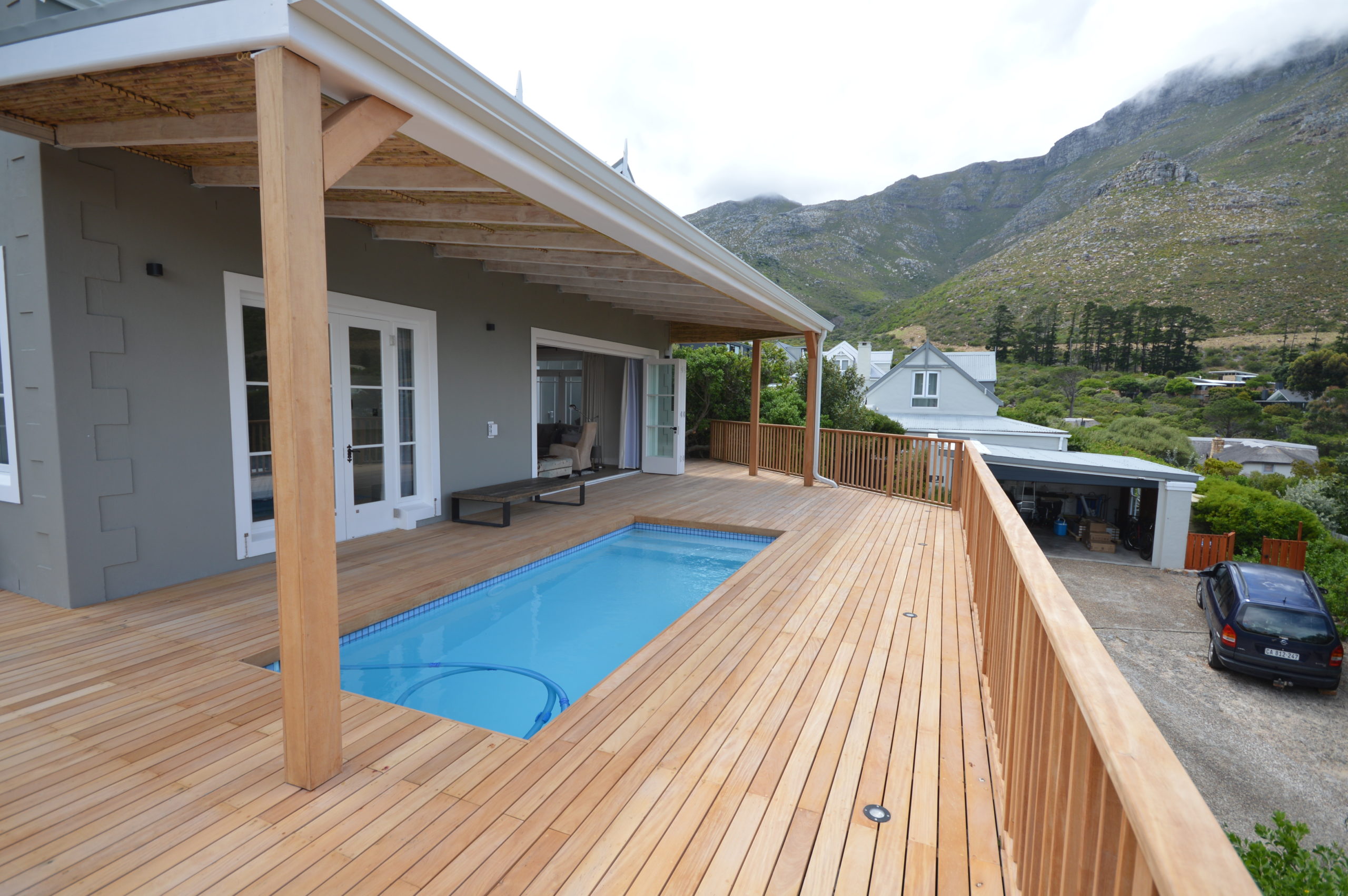
Pergolas, covered patios, screens, shading and carefully positioned planting can create useful outdoor rooms while responding to sun, wind and seasonal conditions.
This can make a home feel larger without necessarily increasing its footprint.
14. Think About the Whole Home, Not Individual Products
An eco-friendly renovation works best when the different elements complement one another.
For example, installing solar panels without improving the home’s energy efficiency may mean you need a larger system than necessary. Similarly, installing large windows without considering shading can increase heat gain.
A more effective approach is to consider:
Orientation → insulation → shading → glazing → ventilation → efficient appliances → hot water → renewable energy.
This whole-home approach can improve comfort and reduce operating costs while creating a more cohesive renovation.
15. Plan for Long-Term Sustainability
The most sustainable renovation is not necessarily the one with the most technology. It is the one that continues to perform well for years to come.
Choose durable finishes, timeless layouts and adaptable spaces. Think about how the home might need to change as your family, lifestyle and energy requirements change.
The Western Cape Government’s recent sustainability work similarly highlights the importance of energy efficiency, water efficiency, sustainable materials and climate-responsive infrastructure.
Eco-Friendly Renovations Can Still Be Beautiful
Sustainable design does not mean compromising on style.
Natural materials, considered lighting, indoor-outdoor connections, water-wise gardens and carefully selected finishes can create homes that are both environmentally conscious and visually appealing.
The goal is to make sustainability part of the design rather than something added at the end.
Whether you are planning a complete home renovation, updating a kitchen, redesigning a bathroom or improving your outdoor living areas, the best approach is to consider how each design decision affects comfort, energy, water use, durability and the character of your home.
At Living Design, thoughtful renovation starts with understanding how your home works, what you want to achieve and how design can improve the way you live.
From material selection and spatial planning to energy-conscious design and beautiful finishes, an eco-friendly renovation can help create a home that is more comfortable, efficient and suited to the Western Cape climate.
Ready to rethink your space? Explore your renovation possibilities with Living Design.
Contact Living Design today for advice on your property renovation.